
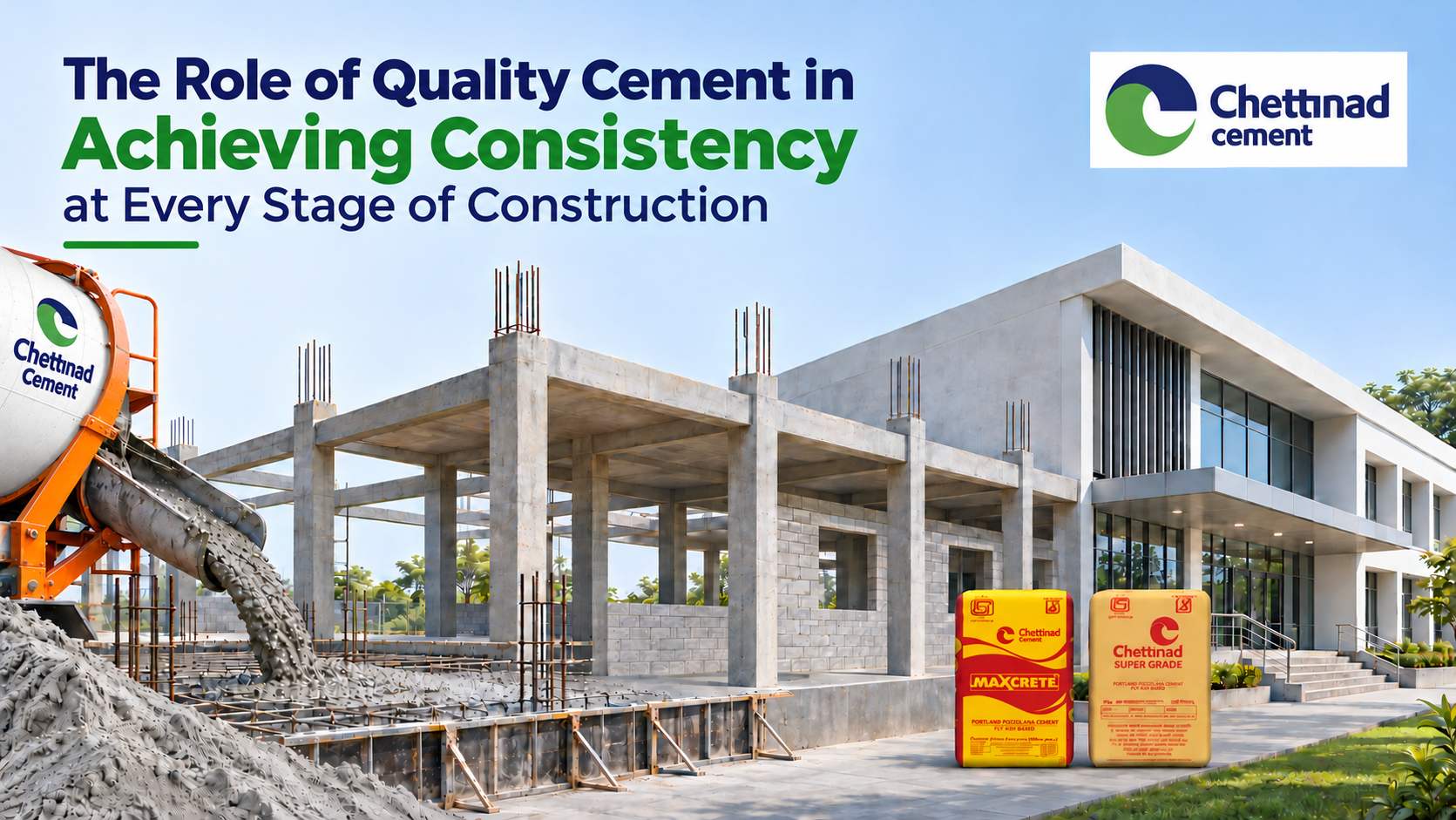
Every building tells a story of planning, precision and purposeful construction. Behind every foundation, wall, column and concrete structure lies a series of important decisions that determine the quality of the finished project. Among these decisions, selecting the right quality cement holds a significant place.
Cement is one of the fundamental materials used in modern construction. Its binding properties make it essential for concrete, mortar and several other construction applications. The quality of cement, along with the right mix proportions, proper workmanship and appropriate curing practices, contributes to the performance and durability of construction.
As construction requirements continue to evolve, the importance of selecting the best quality cement becomes even more significant. Chettinad Cement brings its manufacturing expertise and product range to meet diverse construction requirements, making quality a central consideration in every building project.
1. Understanding the Importance of Quality Cement in Construction
Cement is more than a basic construction material. It plays an important role in bringing different components of a structure together. Its performance directly contributes to the properties of concrete and mortar used across various construction activities.
From residential buildings to commercial developments and infrastructure projects, cement for construction is required at multiple stages of construction.
Quality cement is important because it contributes to:
- Concrete Strength Development: Cement reacts with water through hydration, forming compounds that bind aggregates together and contribute to concrete strength development.
- Structural Applications: Cement forms an essential component of concrete used in foundations, beams, columns, slabs and other structural elements.
- Masonry Performance: Cement-based mortar provides the binding material for brickwork and blockwork, supporting the construction of walls and partitions.
- Construction Consistency: Cement manufactured to defined quality specifications supports consistent material performance when properly stored, proportioned and used.
Selecting suitable cement is therefore an essential step in achieving the intended performance of a construction project.
2. The Role of Cement Manufacturing Quality
The quality of cement begins at the manufacturing stage. Every production stage plays a role in determining the properties of the final product.
The manufacturing process involves carefully managed operations, including raw material selection, proportioning, grinding, blending and quality testing. Maintaining control over these processes is essential to producing cement that meets established technical specifications.
Some important aspects of cement manufacturing include:
- Raw Material Selection: The selection and proportioning of raw materials form the foundation of cement production.
- Precision in Processing: Controlled manufacturing processes contribute to the desired chemical and physical properties of cement.
- Grinding and Fineness: Cement fineness is an important physical property that influences hydration characteristics and strength development.
- Quality Testing: Testing ensures that the finished cement meets applicable product standards and specified performance parameters.
At Chettinad Cement, manufacturing expertise and quality-focused processes form an important part of the brand’s approach to cement production. This focus supports the delivery of cement products developed to address the requirements of the construction industry.
3. Choosing the Right Cement for Every Construction Requirement
Not every construction activity has identical material requirements. The appropriate cement selection depends on the application, structural specifications, environmental conditions and recommendations from construction professionals.
Understanding the available cement products helps builders and contractors make informed decisions.
Chettinad Cement offers a product portfolio designed to address different construction requirements.
Chettinad Super Grade
Chettinad Super Grade is part of the Chettinad Cement product portfolio, serving construction requirements where the selection of cement is guided by project specifications and application needs.
Choosing the appropriate cement and following recommended construction practices are essential for achieving the desired results.
Chettinad Maxcrete
Chettinad Maxcrete is another product in the brand’s cement portfolio, offering a cement solution for construction applications according to its specified product characteristics.
The right selection, combined with proper concrete mix design and execution, contributes to achieving the intended construction performance.
Chettinad HBC
Chettinad HBC forms part of the brand’s product range, addressing specific cement requirements within the construction sector.
Selecting cement according to the intended application and technical specifications is important for maintaining construction quality.
With Super Grade, Maxcrete and HBC, Chettinad Cement brings multiple product options under one brand, serving the varied requirements of today’s construction industry.
4. Quality Cement and the Foundation of Structural Performance
A strong structure begins with a well-planned foundation. Foundation construction involves careful consideration of soil conditions, structural loads, concrete specifications and material selection.
Cement plays an important role in preparing the concrete used for foundation work. Its binding properties contribute to the development of concrete strength through the hydration process.
However, achieving the desired foundation performance involves more than cement selection alone.
The following construction practices are equally important:
- Following the concrete mix design specified by qualified professionals.
- Maintaining the correct water-to-cement ratio.
- Ensuring proper mixing and placement of concrete.
- Providing adequate compaction to minimise unwanted air voids.
- Following appropriate curing procedures.
- Adhering to engineering specifications and construction standards.
When quality materials are supported by disciplined construction practices, every stage contributes to the intended structural performance of the project.
Chettinad Cement recognises the importance of cement in this process and brings its product expertise to the construction industry.
5. The Importance of Proper Cement Storage and Handling
Selecting quality cement is only one part of maintaining construction material quality. Proper storage and handling are equally important to preserve its properties before application.
Cement can absorb moisture from its surroundings. Exposure to moisture can initiate hydration and affect its usability.
Construction sites must therefore follow appropriate storage practices.
- Keep Cement Away from Moisture: Store cement in a dry, covered area protected from rain and water exposure.
- Use Proper Storage Arrangements: Keep cement bags on raised platforms rather than directly on the floor.
- Maintain Proper Stacking: Arrange bags systematically and avoid excessive stacking that could damage the packaging.
- Follow Stock Rotation: Use older stock first while checking the condition of the bags before application.
- Protect Packaging: Keep bags covered and away from damp walls and exposed surfaces.
Proper storage protects cement quality and supports better material management throughout the construction process.
6. Chettinad Cement: Manufacturing Expertise for Modern Construction
The construction industry requires cement products that meet defined quality specifications and address different application requirements. Meeting these expectations calls for manufacturing knowledge, process control and a clear focus on product quality.
Chettinad Cement has established its presence in the cement industry through its manufacturing capabilities and product portfolio.
The brand’s commitment to cement manufacturing is reflected in its focus on quality, product development and serving the evolving requirements of construction.
Whether the requirement involves an individual home, a residential development, a commercial building or a larger construction project, Chettinad Cement offers product options to meet varied construction needs.
The brand’s Super Grade, Maxcrete and HBC products represent its portfolio of cement solutions for the construction sector.
By placing quality and manufacturing expertise at the centre of its operations, Chettinad Cement continues to serve the needs of builders, contractors, engineers and customers across the construction industry.
7. Building for the Future Starts with Better Material Choices
Modern construction demands careful planning at every stage. Material selection, structural design, construction techniques and quality control work together to determine the outcome of a project.
Choosing cement should therefore be a considered decision rather than a routine purchase.
Builders and homeowners should evaluate cement according to the intended application, applicable standards and professional recommendations. Paying attention to product specifications, storage conditions and construction practices helps maintain material quality throughout the project.
The right construction decisions made at the beginning create a stronger foundation for the work that follows.
Chettinad Cement brings its range of cement products and manufacturing expertise to support these construction requirements, placing quality at the centre of its brand philosophy.
Conclusion: Choose Chettinad Cement for Your Construction Journey
Every construction project begins with a vision. Turning that vision into a completed structure requires the right materials, technical expertise and attention to detail at every stage.
Cement remains a fundamental part of this journey, contributing to concrete preparation, structural applications and masonry work. Selecting the appropriate cement and following established construction practices are essential to achieving the desired results.
With a commitment to manufacturing quality and a portfolio that includes Super Grade, Maxcrete and HBC, Chettinad Cement brings its expertise to the diverse requirements of the construction industry.
When every construction decision matters, begin with the right material selection.
Choose Chettinad Cement. Choose quality for every construction milestone.
Chettinad Cement | Strength That Shapes Tomorrow.
Frequently Asked Questions (FAQs)
1. Why is cement quality important in construction?
Cement quality plays an important role in concrete strength development, binding properties and overall construction performance. Selecting cement that meets the required standards is essential for achieving the intended results.
2. How do I choose the best quality cement for building construction?
Consider the project specifications, type of construction, required cement grade and applicable quality standards. Consult a qualified engineer or construction professional before making your selection.
3. Which factors determine cement quality?
Important factors include fineness, setting time, compressive strength and chemical composition. These properties are evaluated through standardised testing procedures.
4. Which Chettinad Cement products are available for construction?
Chettinad Cement offers products including Super Grade, Maxcrete and HBC to address different construction requirements. Refer to the respective product specifications for application details.
5. How should cement be stored at a construction site?
Store cement in a dry, moisture-free and well-ventilated area. Keep bags elevated from the floor, away from walls and protected from rain and moisture.
6. Does proper curing contribute to concrete strength?
Yes. Proper curing maintains adequate moisture and temperature conditions, allowing cement hydration to continue and supporting the development of concrete strength.
7. What should be considered before using cement for concrete preparation?
Consider the approved mix design, cement grade, aggregate quality, water proportions, mixing procedures and curing requirements to achieve the specified concrete performance.”