
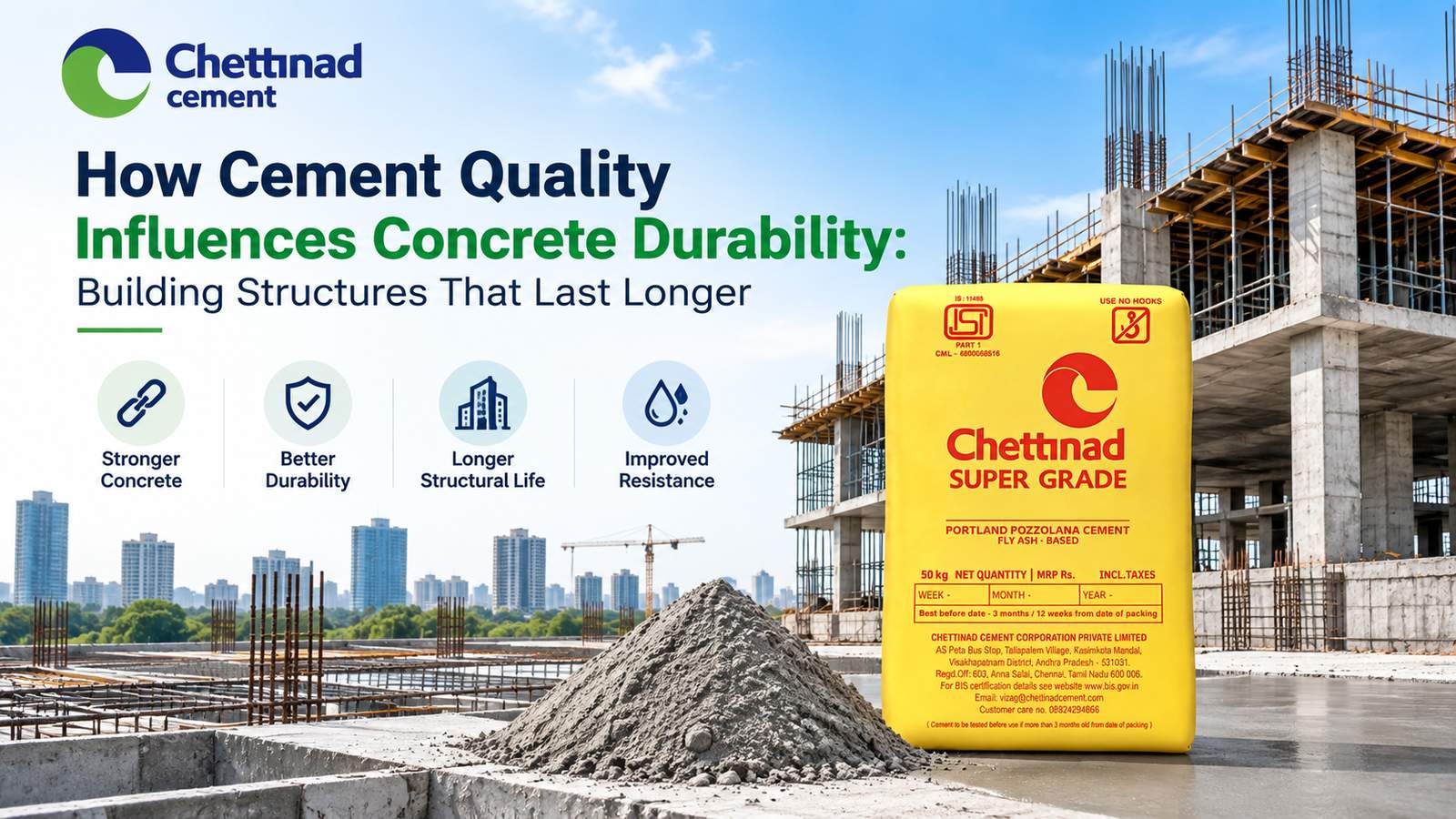
A strong structure is designed to perform for years, and cement quality plays an important role in achieving that goal. From foundations and columns to beams, slabs, and masonry, cement forms an essential part of construction materials that support strength and durability.
While structural design and workmanship are equally important, selecting quality cement provides a strong foundation for producing reliable concrete and mortar.
For homeowners, builders, and contractors, understanding the connection between cement quality and concrete durability can help make better construction decisions.
Why Does Cement Quality Matter?
Cement acts as a binding material in concrete and mortar. When combined with water, it undergoes hydration and contributes to the formation of the hardened cement matrix.
The quality and consistency of cement can influence important characteristics of concrete, including:
- Strength development
- Setting characteristics
- Cohesion
- Durability
- Permeability
- Long-term performance
Quality cement, when used with appropriate aggregates, controlled water, and a suitable mix design, supports the production of consistent and durable concrete.
Cement Quality and Concrete Durability
Durability refers to the ability of concrete to maintain its required performance over its intended service life.
A durable concrete structure requires a combination of factors, including quality materials, appropriate mix proportions, adequate concrete cover, proper compaction, and effective curing.
Cement contributes to the formation of the binding matrix that holds the concrete together. A well-controlled cementitious system can support dense and durable concrete when the complete mix and construction process are properly managed.
The Importance of Consistency
Construction projects require consistent material performance from one batch to another.
Consistent cement characteristics help construction teams maintain greater control over concrete production and application.
This becomes particularly important for large projects where concrete is produced and placed across multiple stages.
Choosing cement from an established and quality-focused manufacturer can support greater confidence in material consistency.
Cement and the Water-Cement Ratio
Cement quality works closely with water management.
Water is essential for cement hydration and concrete workability. However, excessive water can increase the pore structure within hardened concrete and influence strength and durability.
Maintaining the specified water-cement ratio is therefore critical.
Quality cement combined with controlled water and an approved mix design helps create concrete with the intended performance characteristics.
Quality cement, controlled water, and the right mix design work together to support concrete durability and long-term performance.
Cement Quality and Different Construction Applications
Cement is used across a wide range of construction applications, including:
Foundations
Supporting the base of residential and commercial structures and providing a stable foundation for the building.
Columns and Beams
Forming essential reinforced concrete structural elements that help transfer and support building loads.
Slabs
Creating floors and roofs designed according to structural requirements and project specifications.
Masonry
Supporting mortar used in brick and block construction.
Plastering
Providing cement-based finishes for walls and other surfaces.
Each application has specific technical requirements, making appropriate cement selection important for achieving the desired performance.
Proper Storage Protects Cement Quality
Quality cement needs proper storage before use.
Cement bags should be kept in a dry, enclosed, and moisture-protected area, elevated above the floor and away from damp walls.
During the monsoon season, additional attention should be given to protection from rainwater, humidity, and water seepage.
Good storage practices help maintain cement condition from delivery through application.
Quality Cement Needs Quality Construction Practices
Cement is an important part of construction, but its performance depends on how it is used.
A quality-focused concrete process includes:
- Accurate batching
- Suitable aggregates
- Controlled water
- Proper mixing
- Correct placement
- Effective compaction
- Adequate curing
Every stage contributes to the final performance and durability of concrete.
Why Choose Chettinad Cement?
Construction quality begins with material quality.
Chettinad Cement provides quality cement solutions for diverse construction requirements, supporting homeowners, builders, and contractors in building structures focused on strength, consistency, and durability.
With a strong focus on quality, Chettinad Cement becomes part of construction projects where every stage matters, from the foundation to the finished structure.
Build Today. Perform for Years.
A durable building is the result of decisions made long before the structure is completed.
Choosing quality cement, following the correct mix design, controlling water, maintaining proper storage, and applying disciplined construction practices all contribute to long-term performance.
Cement may be one component of concrete, but its role is fundamental.
With Chettinad Cement, builders can build on a foundation of quality, consistency, and confidence.
Chettinad Cement. Quality that builds lasting strength.
Conclusion
Durability begins with quality, and quality begins with the right material.
Cement plays a fundamental role in concrete and mortar, making quality and consistency important considerations for every construction project.
When quality cement is combined with appropriate mix design and disciplined construction practices, it creates a stronger foundation for concrete designed to deliver long-term performance.
Chettinad Cement. Building quality into every structure.